
Estimated reading time: 4 minutes
Investing in new technology is often seen as the solution to complex business challenges. But the real impact of that investment depends on something else: the people working with it.
For one of our clients, Exchange for Change, the goal was clear: replace a legacy system with a scalable, future-proof solution using Mendix.
The platform was successfully implemented and is already delivering value. But successful technology adoption goes beyond implementation. It requires internal knowledge, understanding, and ownership.
At CAPE, we believe in enabling organisations to make the future happen. That means not only delivering solutions, but also equipping teams with the skills to manage and evolve them. Through our CAPE Academy, we provide Mendix training for both existing clients and organisations looking to build their own low-code capabilities.
For Exchange for Change, this meant gaining deeper insight into how Mendix works: what they could change themselves, how the platform is structured, and how to better collaborate during ongoing development. As we continue to enhance their supplier portal, this knowledge directly improves how we work together, refinements become clearer, decisions faster, and delivery more efficient.
A Common Challenge in New Technology Adoption and Legacy Replacement
Many organisations moving from legacy systems to new technology, in this case low-code platforms face the same challenge: the system works, but internally it still feels like a black box.
Teams are told they can make changes themselves, but don’t fully understand how.
The platform is used daily. Adjustments are possible. But the underlying logic, architecture, and data structures remain unclear. That lack of understanding creates dependency.
Without a solid grasp of the platform:
- Every change requires external support
- Decision-making slows down
- Internal ownership remains limited
Creating a training that make sense
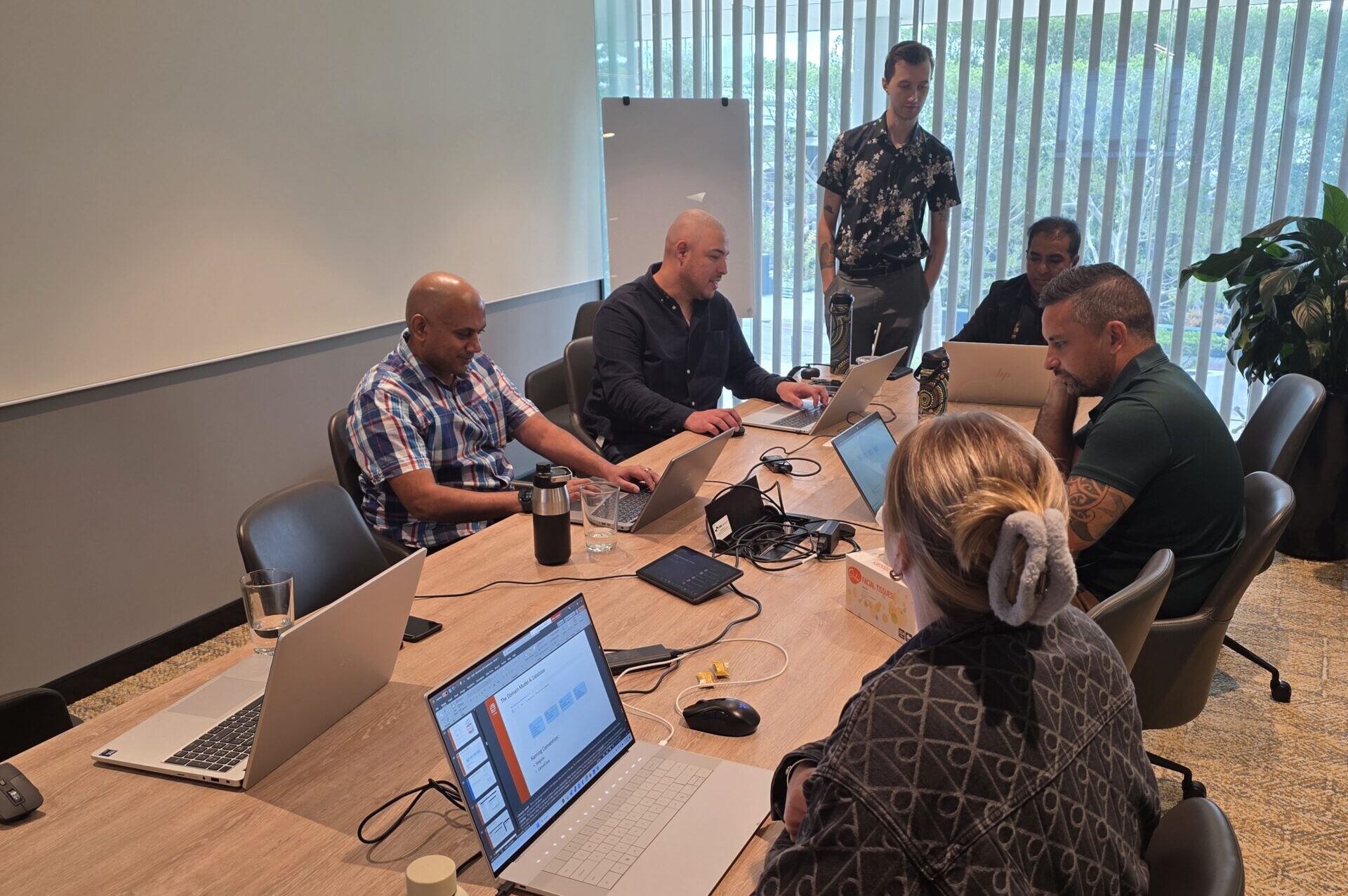
To support Exchange for Change in their transition, we delivered a Mendix Basic Training. Not as a theoretical course, but as a hands-on workshop tailored to their context. The training group reflected the organisation itself: IT manager, IT support, data manager, and business analyst. Each participant brought a different perspective, but all shared the same goal, understanding their role in the system.
Our Mendix Expert and MVP, Chelsea Veenstra, adapted the training to their needs:
“We usually run the basic training across three days, but for Exchange for Change we condensed it into two. This helped participants stay focused without becoming overwhelmed by activities outside the training room. We tailored the content to reflect their actual solution, so they could recognise components they work with daily, making it more relevant and easier to connect the dots. At the same time, the training was designed to prepare them to understand the basics of Mendix, enabling them to achieve certification while building a solid foundation for learning more advanced topics in the future.”
During the training, participants didn’t just explore the existing system. They built an application from scratch. This gave them direct insight into how logic, components, and data layers come together within Mendix.
Instead of only using the platform, they learned how to think in it.
“The training helped us better understand how to translate business needs into what the platform canactually deliver. It also gave much more context to the questions asked during refinements.”
Building Internal Capability with Mendix Training
By the end of the training, the team had a much clearer understanding of both the platform and their role within it. The impact is immediate:
- Better collaboration between business and IT
- Faster and more focused refinements
- Reduced reliance on external development teams
While Mendix certification is a valuable outcome, it’s not the main goal. The real value lies in building internal capability.
Low-code platforms like Mendix are designed to increase speed, flexibility, and innovation. But without the right level of knowledge, organisations cannot fully benefit from these advantages.
As Chelsea puts it:
“It’s like being given a powerful tool without knowing how to use it. The tool might be great, but without proper training, you’ll never unlock its full potential.”
By investing in low-code training, you:
- Strengthen internal ownership of your systems
- Reduce dependency on external partners
- Improve decision-making speed
- Enable continuous optimisation and innovation
This is especially critical when replacing legacy systems, where long-term adaptability is key.