
Reading time: 3 minutes
Digital transformation is often postponed because it feels risky, expensive, or disruptive. But in reality, doing nothing is usually the most expensive choice an organisation can make.
In this article, you’ll learn:
- The hidden cost of doing nothing
- Why outdated systems slow down growth
- How to start your digital transformation the right way
Doing nothing feels safe. But it is often the most expensive option. For many organisations, the challenge is not a lack of strategy. You already know where the bottlenecks are. You know which systems are outdated. You understand that processes could be more efficient, more scalable, more integrated.
But when systems still “work” and operations continue, it is easy to delay decisions around digital transformation, custom software development, or legacy system modernisation. Not because the problem is ignored. But because it does not yet feel urgent. Until it is. Because while nothing seems to break, something else is happening. Your organisation is slowly becoming less efficient, less flexible, and ultimately less competitive.
The cost of inaction doesn’t sit in one place. It spreads across your entire operation, and therefore owners.
The biggest problem with doing nothing is that the cost does not sit in one place. It spreads across the entire organisation and therefore across owners, leaders, and teams. In many organisations, we see the same pattern.
Not a single critical failure, but a gradual build‑up of inefficiencies:
- Teams and often multiple departments working around system limitations instead of being enabled by them
- Increasing reliance on manual processes to bridge gaps between systems
- Delayed decision‑making due to fragmented or outdated data, often interpreted differently by different department heads
- Rising maintenance costs of legacy systems that no longer fit how the business operates.
Individually, these problems are manageable. Collectively, they slow down the organisation in ways that are difficult to measure, but impossible to ignore over time. As organisations grow, complexity increases. What once worked as a practical solution slowly turns into a constraint.
We see this especially in companies where:
- Systems were implemented for a very different stage of the business and have since been heavily customised
- Standard software no longer matches the way the organisation actually works because the business has changed over time
At that moment, IT systems are no longer supporting the business strategy. This is where IT modernisation and custom software move from “nice to have” to business‑critical.
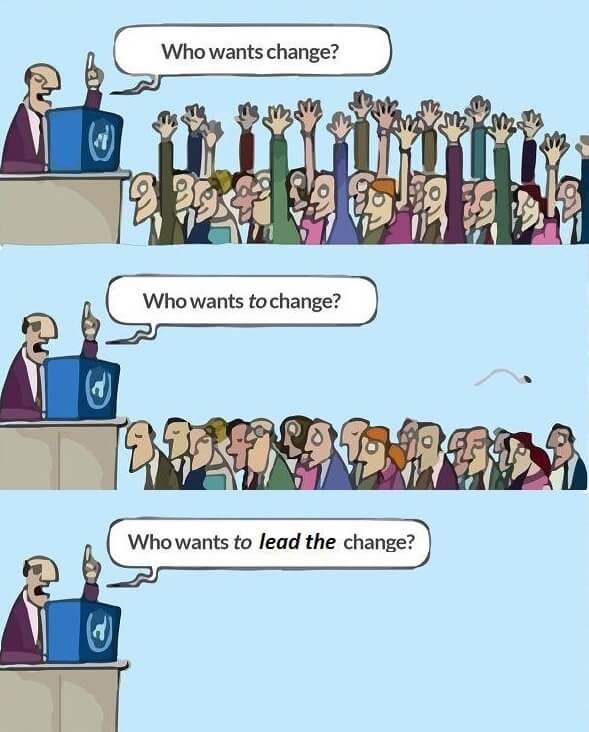
“You are the problem”, “No, you are the problem”
A lot of times the business says IT is the problem and IT says the business is the problem. One thing we can tell you, both parties are frustrated and do want to change. But bitching about each other is not the solution. It’s on the short term the easiest but will not lead to anything.
In these situations, you need a leader to set-up. Someone that wants to own this problem. Ideally, it’s owned by both the business and IT. Someone needs to be the ‘growth-up’ say out loud that the current situation isn’t acceptable, and there will be change required. Everyone wants change, but nobody wants to change, let alone who will lead the change.
Standing still creates a negative competitive gap
Organisations that invest in digital transformation are continuously improving how they operate. They automate core processes, make faster and more informed decisions, and create better experiences for both employees and customers
Digital transformation might be a buzzword, but at its core it is exactly that: transformation.
It is not a one‑off project or something that “solves it once.” It is a journey. A mindset. A culture where the organisation is able to continuously adapt.
Over time, this leads to a growing gap between companies that evolve and those that maintain the status quo. And once that gap exists, catching up becomes far more complex and significantly more expensive than starting earlier.